


January 24, 2025
News
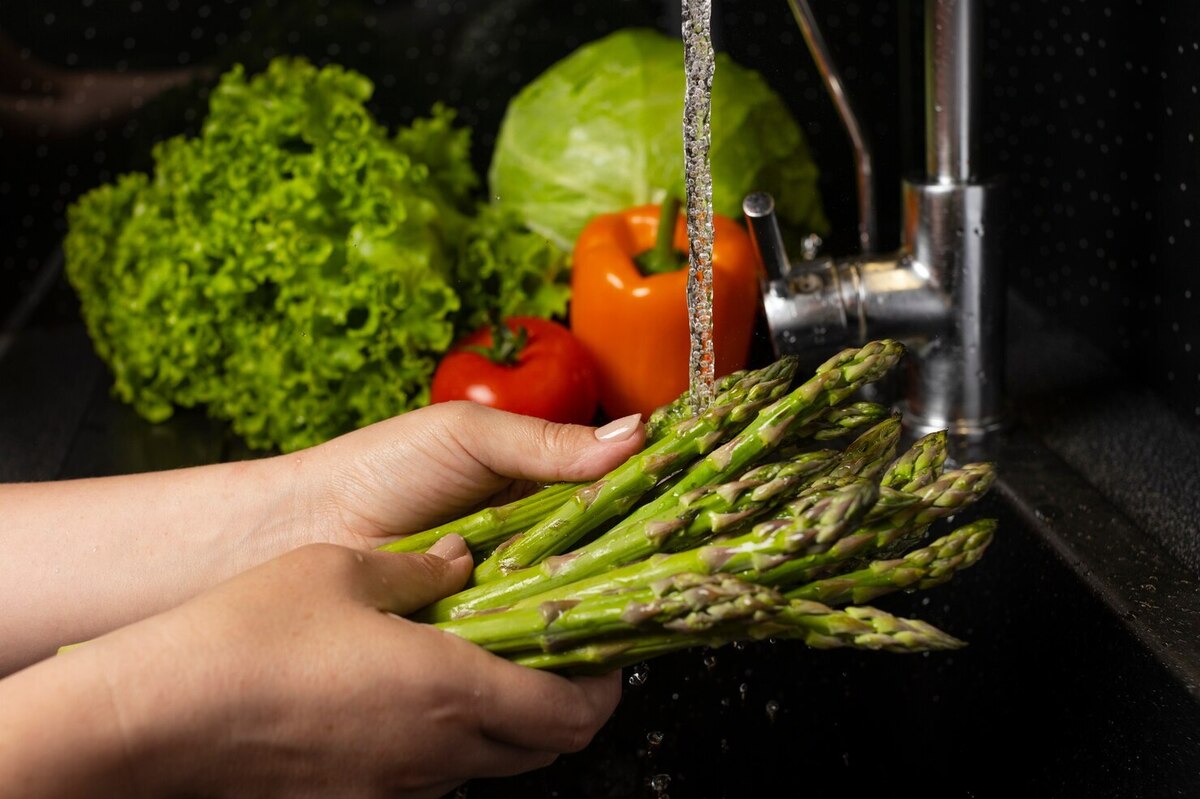
According to official data, approximately 40,000 cases of human food poisoning or disease are registered annually in Georgia. However, the actual numbers are much higher. Food may contain various chemical substances due to consumption, which a person may not be poisoned at once, but in case of systematic intake, they may develop some severe disease. Ensuring food safety is based on the “from farm to fork” principle, in which each chain, starting from the producer and ending with the consumer, has its share of responsibility. The National Food Agency is the main controlling body that detects violations and, if necessary, suspends the business operator's activities.
The role of the producer and the state in ensuring food safety
The European Union has been supporting the development of Georgia's food safety standards for many years. These standards are implemented in all developed countries and are based on universal food safety principles. Their implementation helps our country not only to ensure safe food, but also to produce respective products for exporting to the EU market with 27 countries and more than 500 million consumers. Within the framework of various large-scale projects, the European Union helps our country to strengthen the capacities of state institutions, agri-food laboratories, food business operators, and other interested parties responsible for food safety. In addition, it supports various information campaigns on food safety and consumer rights throughout the country.
The National Food Agency is Georgia's main authority for food safety control. The agency controls entrepreneurs and food throughout the country and disseminates relevant information to the public about identified violations and threats.
Depending on their activity profile, every business operator has specific requirements on what they should pay attention to ensure safe food. General obligations include compliance with hygiene and sanitary standards at all stages: production, processing, and delivery. Compliance with the HACCP principle, which involves hazard analysis and determining critical control points, plays a vital role in food safety. In addition, there are requirements regarding the chemicals allowed to be used in production.
The National Food Agency inspects business operators proactively, within its plan, based on identified threats and reactively – based on information provided by the consumer or the National Center for Disease Control. If a violation is detected, the agency offers the business operator a mandatory recommendation(s). If the detected violation is not corrected within the stipulated period, it is possible to extend the period; however, in case of disobedience, the agency is obliged to fine the entrepreneur. If they are dealing with such a violation that cannot be eliminated, the agency has the authority to stop the production process and, at the same time, impose fines.
The agency's control results are published on the website www.nfa.gov.ge. Here, you can see the results of the inspection of any enterprise or product you are interested in.
The role of citizens in ensuring food safety
Ensuring food safety is based on the "from farm to fork" principle, which means that the responsibility for food safety starts with the entrepreneur and ends with the consumer.
Initially, harmless food can become hazardous during processing, shipping, sale, storage, and preparation. The consumer's responsibility includes purchasing the product at an officially registered merchant, checking the expiration date on the etiquette, storing the perishable product in the refrigerator at the appropriate temperature, etc. Naturally, both the producer and the consumer must follow hygiene and sanitary norms.
It is also essential to share civic responsibility. In 2023, with the support of the European Union, the Center for Strategic Research and Development of Georgia conducted a sociological survey to determine how much the public is informed about the importance of food safety. "Have you reacted in case of encountering food safety violation?" was one of the survey questions, to which the majority gave a negative answer.
However, half of those who did it reported achieving positive results. 99% of these responses were expressed directly in the shop or catering establishment by filing a complaint with the business operator, and it was found that the problem was resolved between the business operator and the customer as a result of direct communication without the state's intervention. This is proof that great importance is attached to civic activity.
The National Food Agency – 15 01 hotline is worth mentioning separately. Calling it is confidential, and any citizen has the right to contact the agency at any time upon discovering a violation in terms of food safety. The agency is obliged to promptly respond to such appeals and inform the user about the result.
The role of EU support in the field of food safety of Georgia
After the special mission of the European Commission visited Georgia in 2009, reforms in food safety were defined as one of the prerequisites for the association agreement between the EU and Georgia. Accordingly, the country actively began to implement the necessary reforms: a strategy was developed, and a framework law was adopted, followed by the conclusion of an association agreement.
Under the association agreement, a long-term ambitious plan for rapprochement with the European Union was signed. This plan provides for the rapprochement of Georgian legislation with the normative acts of the European Union every year until the end of 2028. Currently, our legislation is close to only 134 acts out of 200, although the mentioned normative acts have not been enacted yet. It takes some time, but the process is ongoing.
The reforms mentioned above in the country were followed by institutional development, first of all, the National Food Agency, starting with infrastructural support, ending with training sessions, and sharing European experience, which is necessary to meet the new requirements.
The European Union, the organisations operating directly in the member states of the European Union, has been significantly contributing to this. This support continues to this day, and it means tens of millions of euros, a significant part of which is directed to the systemic level and a relatively small part to support the projects of entrepreneurs and non-governmental organisations working in food safety.
Food Safety is Everyone’s Responsibility and Right!
In case of food safety violations, it is better to report to the National Food Agency hotline at 1501
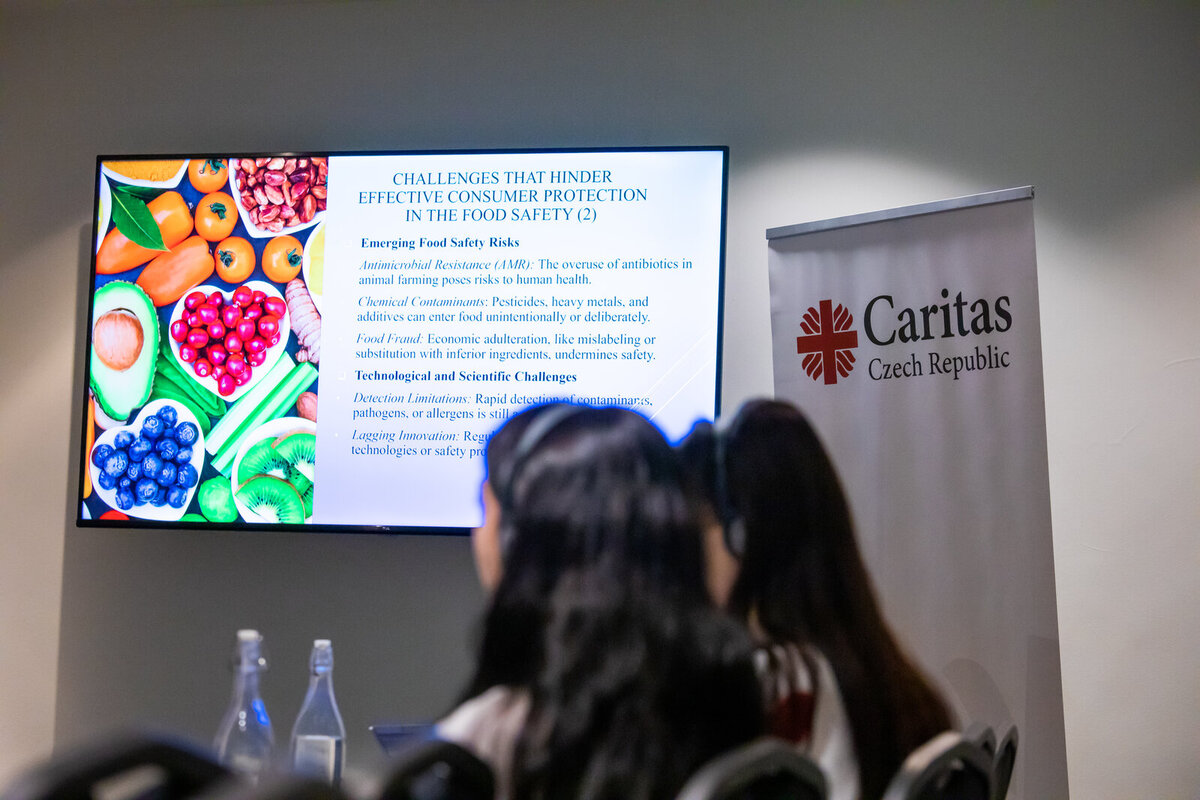
On behalf of the Czech Development Agency, Caritas Czech Republic implements a project "Regions and People for food safety: an EU-endorsed awareness initiative" in close cooperation with the civic society organizations (CSOs) from various regions of Georgia. This activty is a part of the EU's broader initiative "Support to the Food Safety and SPS sector in Georgia under ENPARD IV", which is co-financed by the Embassy of Sweden in Tbilisi, the Czech Development Agency (CzDA), and the Food and Agriculture Organization of the United Nations (UN FAO). The initiative is implemented by the Czech Development Agency and the UN FAO.
This article has been produced with the assistance of the European Union. Its contents are the sole responsibility of the Caritas Czech Republic and do not necessarily reflect the views of the European Union.