


March 31, 2026
Interviews
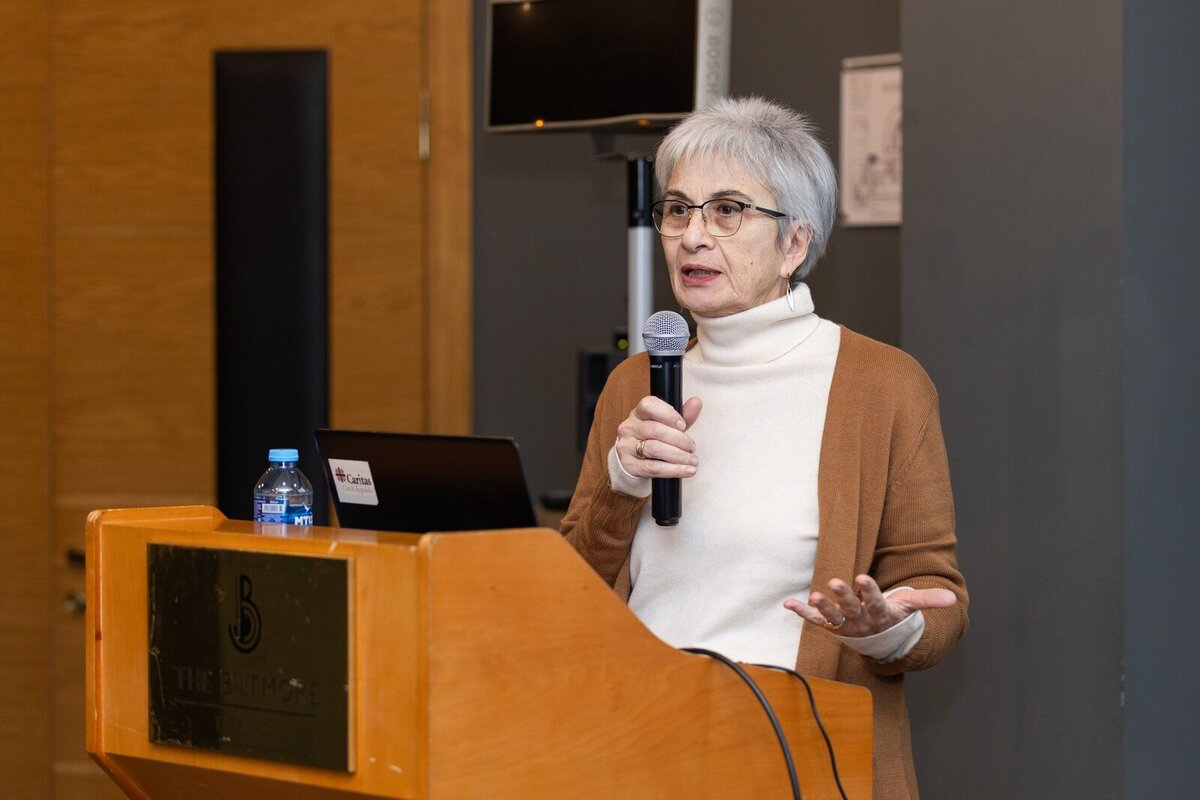
Caritas Czech Republic has been supporting early childhood education and development services in Georgia for many years. Each year, on April 2, our organization joins the global observance of World Autism Awareness Day, which aims to raise awareness about autism. This year, we would like to highlight an important milestone: Maia Gabunia, a project expert with Caritas Czech Republic, child neurologist, and Doctor of Medicine, has been appointed a Global Leader of the International Society for Autism Research (INSAR).
How significant is this achievement for Georgia? What have we learned from the national study on autism prevalence? And how has the field evolved over the past decade? These are the key topics we explore in conversation with Maia Gabunia.
You have been appointed a Global Leader of the International Society for Autism Research (INSAR). What does this mean for you, for the field, and for Georgia’s position in the global research landscape?
Thank you for your continued support of child development in Georgia, especially services for children with autism. The International Society for Autism Research (INSAR) is a leading global organization dedicated to advancing and sharing evidence on autism. It brings together scientists and clinicians from around the world working in this field.
For the first time, Georgia will be represented within INSAR. We will also participate for the first time in its annual congress, which will take place in Prague at the end of April.
For me, this is both a great honor and a significant responsibility. It involves promoting evidence-based knowledge, contributing to the development and improvement of services for individuals with autism, and presenting Georgia’s scientific work to the international community. It also means advocating for INSAR’s standards, research practices, and ethical principles within our professional circles, strengthening global collaboration, and creating opportunities for Georgian specialists — researchers, clinicians, and students — to engage in international initiatives. My role ensures that Georgia’s voice is represented on the global scientific map of autism research and care.
How have autism services in Georgia changed over the past 10 years? What were the main challenges a decade ago, and what challenges remain today?
Around ten years ago, the Tbilisi municipal autism program was launched. It has supported — and continues to support — approximately 2,700 children and adolescents registered in the capital. At that time, similar programs did not exist in other municipalities, largely due to limited human and financial resources.
Some municipalities allocated small budgets for children with specific requirements, but these efforts were often fragmented and inefficient. Early identification of autism was also a major challenge, as awareness among both healthcare professionals and the general public remained low.
Through the Caritas Czech Republic project, autism centers were established in several municipalities, specialists were trained, and municipal autism programs were introduced in both western and eastern regions of Georgia. As a result, early identification and diagnosis have significantly improved. While previously most cases were identified at school age, today children are often diagnosed as early as 2–3 years old.
However, services are still not fully systematized. There remains a critical gap in services tailored to adolescents and adults, with virtually no specialized support available for adults. Early screening at the primary healthcare level continues to depend largely on individual physicians, meaning many cases still go undetected.
How important was the autism prevalence study conducted in Georgia? Why is data-driven policy essential?
From my experience, the epidemiological study on autism in Georgia was a turning point. Before we had reliable data, autism was often perceived as an issue affecting only individual families. The study revealed the true scale of the challenge.
These findings provide a foundation for improving early detection protocols and planning screening more effectively. When data is available, governments and donor organizations are far more likely to invest — because the need is clearly demonstrated. Policymaking without data is like navigating in the dark.
Data enables better allocation of resources: we can determine how many children require therapy and what types of specialists are needed, whether behavioral therapists, psychologists, or speech therapists. Aligning with international standards, such as those of INSAR, ensures quality — children in Georgia should receive the same standard of care as those in Europe or the United States. It also strengthens partnerships with leading international institutions and opens pathways to new knowledge and technologies.
What role has international cooperation, including support from the Czech government, played in this progress?
International support — particularly from the Czech Development Agency through Caritas Czech Republic — has been a key driver of systemic change. Expertise was transferred from leading institutions in the United States, such as the University of California, San Francisco, where Georgian researchers received advanced training.
This was not merely theoretical; it enabled the introduction of Western scientific and clinical standards in Georgia. Gold-standard diagnostic tools, such as ADOS-2 and ADI-R, were introduced and validated, significantly improving the quality of diagnosis.
Strengthening local expertise has also meant that Georgia can now train its own specialists, ensuring sustainability and professional independence.
What progress has been made in municipal-level funding for autism services?
Previously, services were concentrated in Tbilisi, creating significant barriers for families in other regions. Many were forced to relocate to access support.
Through sustained efforts, a transparent service pricing model was developed, allowing municipalities to understand the real cost of therapy per child. We also engaged in long-term advocacy with local governments, emphasizing that autism services are not a matter of goodwill but a responsibility tied to children’s rights. One-time financial assistance proved ineffective.
As a result, nine municipalities have introduced funding for autism services, enabling hundreds of children to receive support within their own communities.
As an INSAR Global Leader, what are your priorities for the coming years?
My vision focuses on three main priorities:
- Establishing a national research platform to generate data that reflects Georgia’s context
- Strengthening global integration by increasing the participation of Georgian specialists in international working groups
- Promoting evidence-based knowledge to ensure that families and professionals rely on scientifically validated approaches and are protected from pseudoscientific practices
What message would you share with society on World Autism Awareness Day?
Autism is not a disease that needs to be “cured”; it is a different developmental pathway. Our goal is not to fit individuals with autism into rigid norms, but to create an environment where they can fully realize their potential.
Acceptance begins with knowledge. The more we understand, the less space there is for fear and stigma.
The United Nations’ 2026 theme — “Autism and Humanity: Every Life Matters” — emphasizes the dignity, rights, and unique potential of every individual on the autism spectrum. It calls on society to move beyond awareness toward meaningful inclusion and participation.
To parents, I would say: you are not alone! The scientific and professional community is working every day to ensure that your children have the opportunity for a dignified and independent future.