


October 8, 2026
News
Mental health problems often present at the primary care level. Sometimes, a patient shares only somatic complaints with their family doctor and does not mention any emotional or psychological problems at all. In some cases, these complaints may be related to underlying mental health problems. This is why strengthening the mental health component of primary care is particularly important: the family doctor is the first point of contact for many patients. Against this background, it is especially important for family doctors to be able to identify problems in a timely manner, assess their severity accurately and, where necessary, manage the patient or refer them to a mental health specialist.
With the support of the European Union and the French Development Agency, Caritas Czech Republic is carrying out the project “Developing Human Capital in Georgia.” The project aims to improve the mental health of Georgia’s population by strengthening the knowledge and skills of healthcare professionals the primary care system.
How the Project Supports the Integration of Mental Health into Primary Care
In recent years, increasing attention has been paid to the early detection and prevention of mental health problems and, in certain cases, to their management at the primary care level. The approach aims to determine which cases family doctors can manage independently and when a mental health specialist is required.
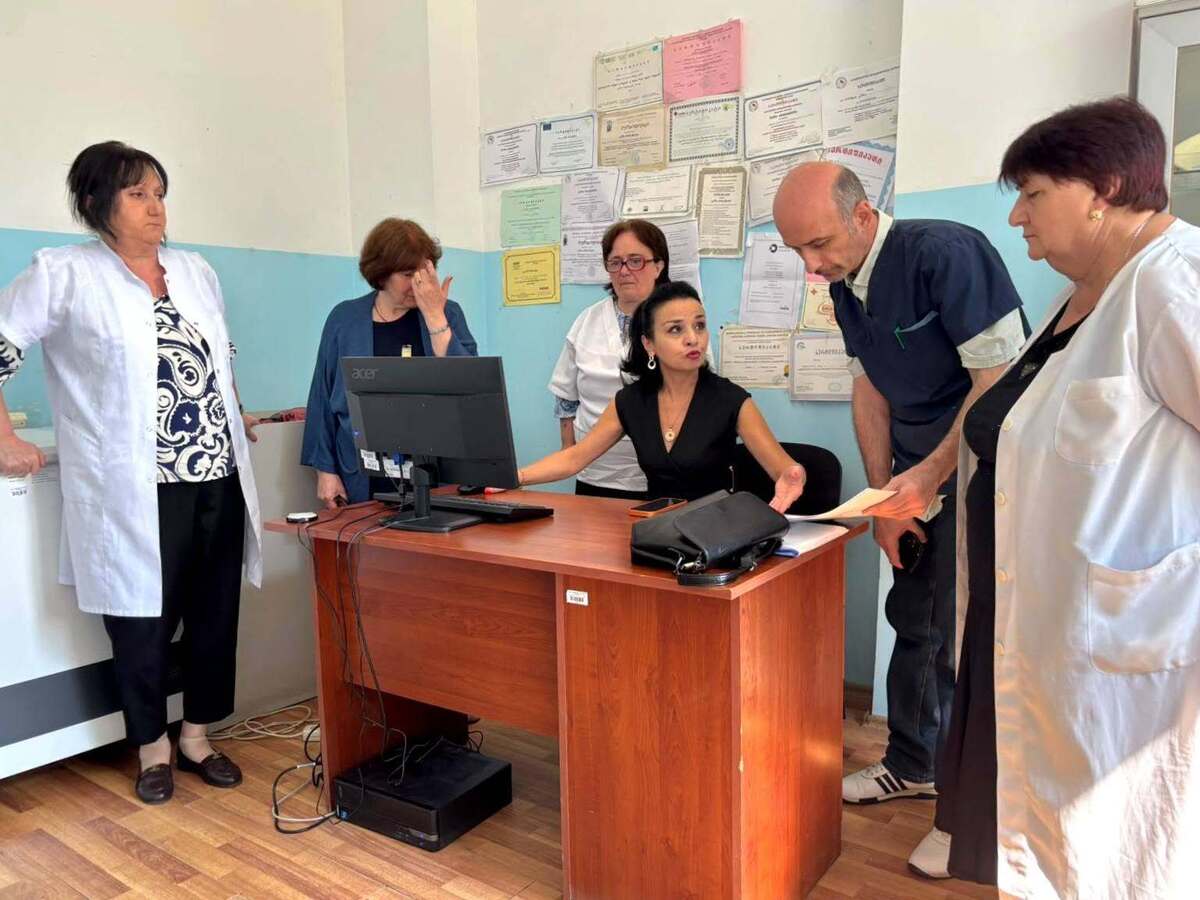
Before the project began, family doctors working in Tbilisi and different regions already had some experience in dealing with mental health problems. However, their knowledge did not always match by practical skills. A particularly important challenge remained the standardised identification and assessment of mental health conditions, the use of appropriate screening tools, documentation of results, and adherence to a unified management algorithm.
“The biggest problem was: ‘What should I do next?’ A doctor might have suspected that a patient had signs of depression, anxiety, problematic alcohol use, or cognitive impairment, still it was less clear how to assess these conditions in a standardised way, how to plan subsequent management, when to initiate the appropriate intervention, and when referral to a specialist was necessary,” — says project expert Nato Shengelia.
As part of the project, primary care physicians received practical tools and clinical algorithms. Alongside training, online supervision and supportive on-site visits helped them understand when to use a particular tool, how to interpret the results and how to plan next steps. Clinical audits, in turn, make it possible to assess how this knowledge is being applied in practice and to identify areas requiring additional support.
The doctors’ training covers the entire clinical process — from identifying a problem to assessment, management, follow-up and, when necessary, collaboration with a specialist. The project experience shows that applying this knowledge in everyday practice requires repeated, case-based learning and continuous professional support.
What Cases Can Family Doctors Manage Independently
One of the project’s key objectives was to make managing mental health problems more practical and clearer for family doctors. The activity was designed to enable family doctors to manage at the primary care level cases that fall within scope of competence. For example, within the relevant clinical guidelines, family doctors can assess and manage mild to moderate depressive and anxiety symptoms, problematic alcohol use, and certain stress-related conditions.

“It is very important that the family doctor not only conducts an initial assessment, but also provides ongoing follow-up — assessing the response to treatment, symptom dynamics and adherence, and, when necessary, modifying the management plan or involving a specialist,” — says Nato Shengelia.
On the other hand, there are cases in which the involvement of a mental health specialist becomes necessary. In such cases, the family doctor’s role does not disappear — the doctor continues to manage the patient’s general health and collaborate with the specialist.
“Primary care and specialised mental health services are not alternatives to one another. A well-strengthened primary care system means that patients receive the help they need as early as possible, while in more complex or high-risk cases, a specialist is involved promptly and appropriately. The ultimate goal is not more referrals, but the right referrals — for the right patient, at the right time, to the appropriate specialist. This is what creates a continuous and safe chain of care for the patient,” says Nato Shengelia.
The Role of Teleconsultations in Supporting Family Doctors and Referral Decisions
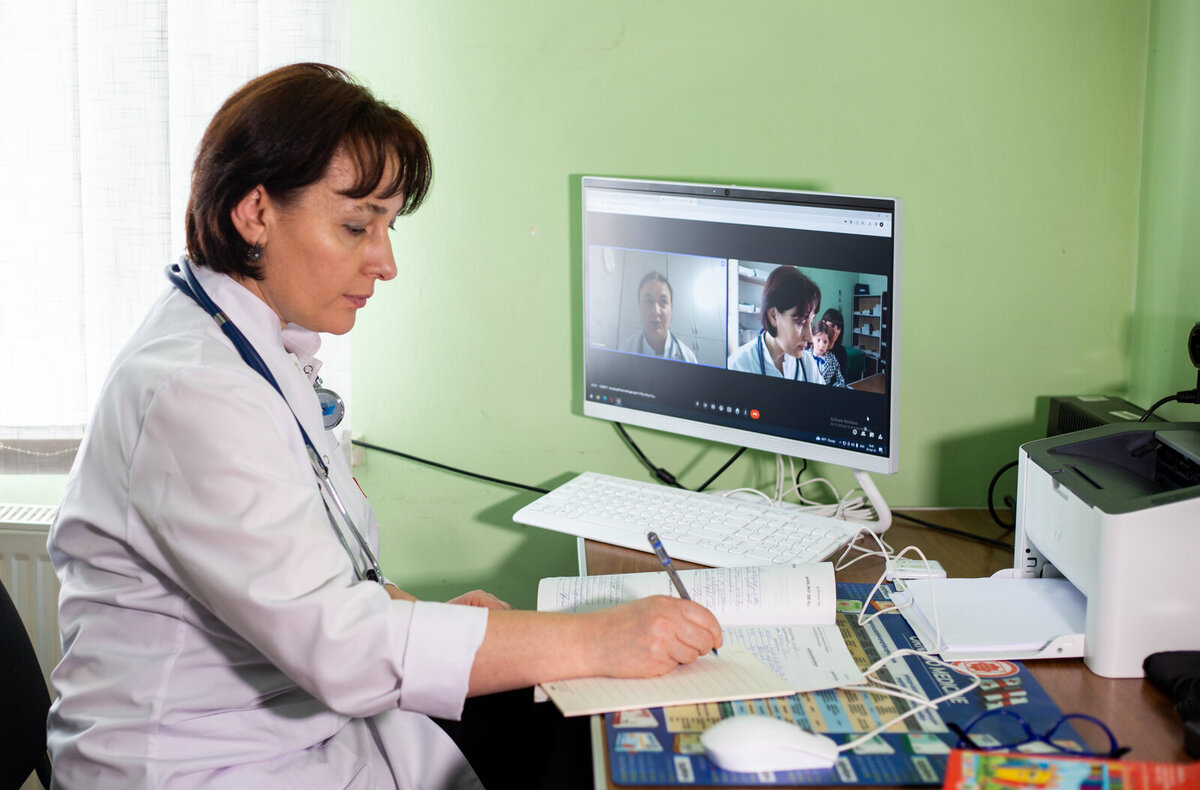
As part of the project, family doctors received remote professional support from a psychiatrist on issues related to assessing and managing complex cases. Teleconsultation is intended to facilitate discussion of a specific patient case and provide appropriate recommendations.
This is particularly important in mental health, because a family doctor may have concerns about a patient’s condition but still have additional questions: Is the intervention available at the primary care level sufficient? Is specialist involvement necessary? How quickly should the patient be referred? Discussing such cases through teleconsultation helps doctors make decisions in a more structured and safer manner.
As part of the project, online learning sessions were held twice a month, during which doctors and experts discussed the assessment and management of real clinical cases. These sessions also included discussions of cases brought to teleconsultation for educational purposes. Such discussions help family doctors develop their clinical reasoning and better understand the criteria that determine whether a case can be managed at the primary care level or requires specialist involvement.
“Therefore, I believe that one of the most important outcomes of the teleconsultations was the beginning of the creation of a professional support network. At this stage, a clear and systematised coordination mechanism has not yet been established; however, the teleconsultations conducted within the project created an opportunity to test in practice this model of case discussion and communication between psychiatrists and primary care physicians,” – says Nato Shengelia.
The teleconsultations showed that a model of regular professional communication between psychiatrists and primary care physicians is feasible in practice and can significantly support family doctors in managing complex cases. The next step is to build on this experience by establishing and implementing a sustainable, clearly defined coordination mechanism for this collaboration.
With the support of the European Union and the French Development Agency (AFD), Expertise France is carrying out the project “Strengthening Human Capital Development in Georgia.” Within the project, Caritas Czech Republic is working to integrate mental health care into Georgia’s primary care system, aiming to address gaps in existing services and align with national reform priorities. The project focuses on equipping family doctors with the skills and knowledge needed to manage common mental health conditions. At the same time, the project supports early detection of illness and continuity of care. Through nationwide training, online supervision, supportive on-site visits, clinical pathways and professional development courses, the initiative helps strengthen mental health services at the primary care level. The goal is for people to receive appropriate support close to home and, when necessary, access specialised services in a timely manner.
This article has been produced with the assistance of the European Union. Its contents are the sole responsibility of Caritas Czech Republic and do not necessarily reflect the views of the European Union